
Lot 704, Batu 13,
Kampung Sungai Rambai,
42600 Jenjarom, Kuala Langat
Selangor, Malaysia.
Contact No :
603-3191 7404 / 6563 / 2118
Fax No :
603-3191 6563 / 603-31913118
Mr. Teh Guo Huong :
019-270 2628 /
019-321 3803
Email : timbertopsb@yahoo.com / timbertopsb@gmail.com
Timber Doors Manufacturers in Malaysia
Timber doors manufacturers play an important role in supplying high-quality, durable and beautifully crafted door solutions for homes, commercial buildings, hotels, offices and property developments. For projects that require natural aesthetics, structural reliability and custom design flexibility, working directly with an experienced timber door manufacturer in Malaysia provides greater control over materials, workmanship, specifications and finishing.
At TimberTop, we manufacture premium timber doors designed to meet the requirements of homeowners, architects, interior designers, contractors, developers and commercial property owners. Combining experienced woodworking craftsmanship with modern manufacturing technology, we produce solid timber doors, engineered timber doors, custom timber doors, veneer doors, flush doors, fire-rated doors and other architectural door solutions.
From a single bespoke entrance door to large-scale developments requiring hundreds of doors, our manufacturing capabilities allow us to deliver consistent quality, precise specifications and dependable project support.
If you are looking for timber doors manufacturers in Malaysia, choosing the right manufacturing partner can make a significant difference to the appearance, performance and long-term value of your project.
Why Choose TimberTop as Your Timber Door Manufacturer in Malaysia?
Selecting timber doors is not simply about choosing a design. The timber species, construction method, moisture control, machining accuracy, finishing system and quality assurance process can all affect the final performance of a door.
At TimberTop, we take a complete manufacturing approach to ensure every door is produced according to the required specifications.
Experienced Timber Door Manufacturing
Our experience in timber door manufacturing enables us to support a wide range of residential and commercial applications. We understand the importance of balancing appearance, durability, dimensional stability and functionality when manufacturing timber doors.
Our team works with:
- Homeowners
- Property developers
- Architects
- Interior designers
- Main contractors
- Renovation contractors
- Commercial property owners
- Hospitality operators
This project experience allows us to recommend appropriate door constructions, materials and finishes based on the intended application.
Precision Manufacturing Technology
Modern timber door manufacturing requires more than traditional woodworking skills. Precision machinery helps ensure accurate dimensions, consistent profiles and reliable production quality.
Our manufacturing facility combines skilled craftsmanship with modern CNC machinery, precision cutting equipment and advanced finishing systems. This enables us to produce doors with accurate dimensions and consistent workmanship across individual and high-volume orders.
Premium Timber and Engineered Materials
The quality of a timber door starts with the materials used during production. We carefully select timber and engineered wood materials based on their suitability, appearance, stability and intended application.
Depending on the project, available timber options include species such as:
- Merbau
- Nyatoh
- Oak
- Teak
- Ash
- Walnut
- Maple
- Mahogany
The appropriate material depends on the door's location, design requirements, performance expectations and budget.
Custom Timber Door Manufacturing
One of the key advantages of working with a manufacturer is the ability to customise your doors.
We can manufacture timber doors according to project-specific requirements, including:
- Door dimensions
- Door thickness
- Timber species
- Panel configurations
- Groove patterns
- Decorative designs
- Glass inserts
- CNC carvings
- Veneer selections
- Surface finishes
- Hardware preparation
- Lock preparation
This makes our timber doors suitable for both contemporary and traditional architectural designs.
Strict Quality Control
Every stage of our production process is monitored to maintain consistent quality. From material inspection and moisture conditioning to machining, assembly, sanding and finishing, quality checks help ensure that the finished product meets the required specifications.
Before delivery, doors are inspected for dimensional accuracy, surface quality, structural integrity, finish consistency and hardware preparation.
Project Support Across Malaysia
We supply timber door solutions for projects across Malaysia, including Kuala Lumpur, Selangor, Johor, Penang, Perak, Melaka, Negeri Sembilan, Pahang, Kedah, Sabah and Sarawak.
Whether you are completing a residential renovation or a large commercial development, our team can provide manufacturing support according to your project requirements.
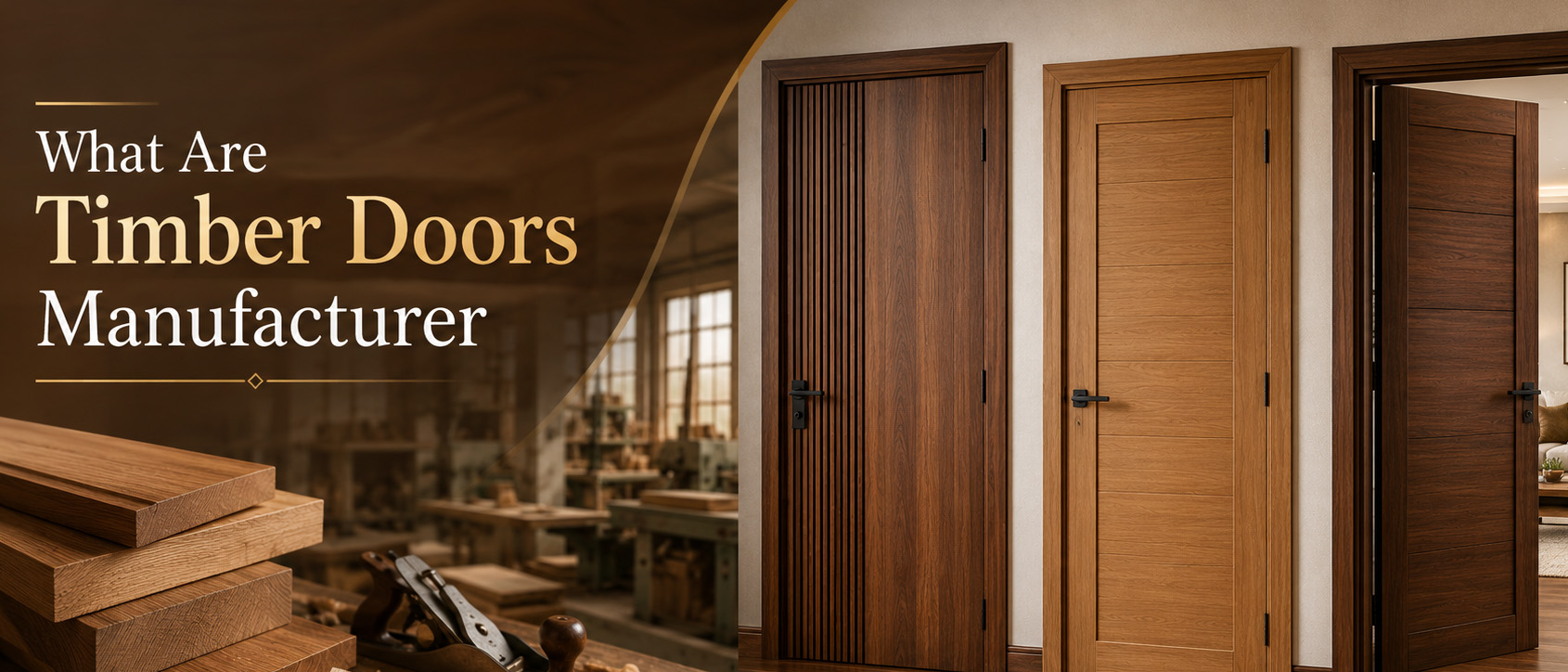
What Are Timber Doors Manufacturers?
Timber doors manufacturers are companies that design, manufacture, finish and supply doors made from natural timber or engineered wood materials.
Unlike a conventional reseller that purchases finished doors from another company, a manufacturer has greater involvement in the production process. This can include material selection, timber conditioning, cutting, CNC machining, assembly, sanding, finishing and quality inspection.
Working directly with a timber door manufacturer can therefore provide greater flexibility when your project requires non-standard dimensions, custom designs, specific finishes or larger production quantities.
Professional timber door manufacturers may produce:
- Solid timber doors
- Engineered timber doors
- Custom timber doors
- Timber entrance doors
- Internal timber doors
- Bedroom doors
- Bathroom doors
- Office doors
- Hotel doors
- Fire-rated timber doors
- Acoustic timber doors
- Veneer doors
- Flush doors
- Decorative panel doors
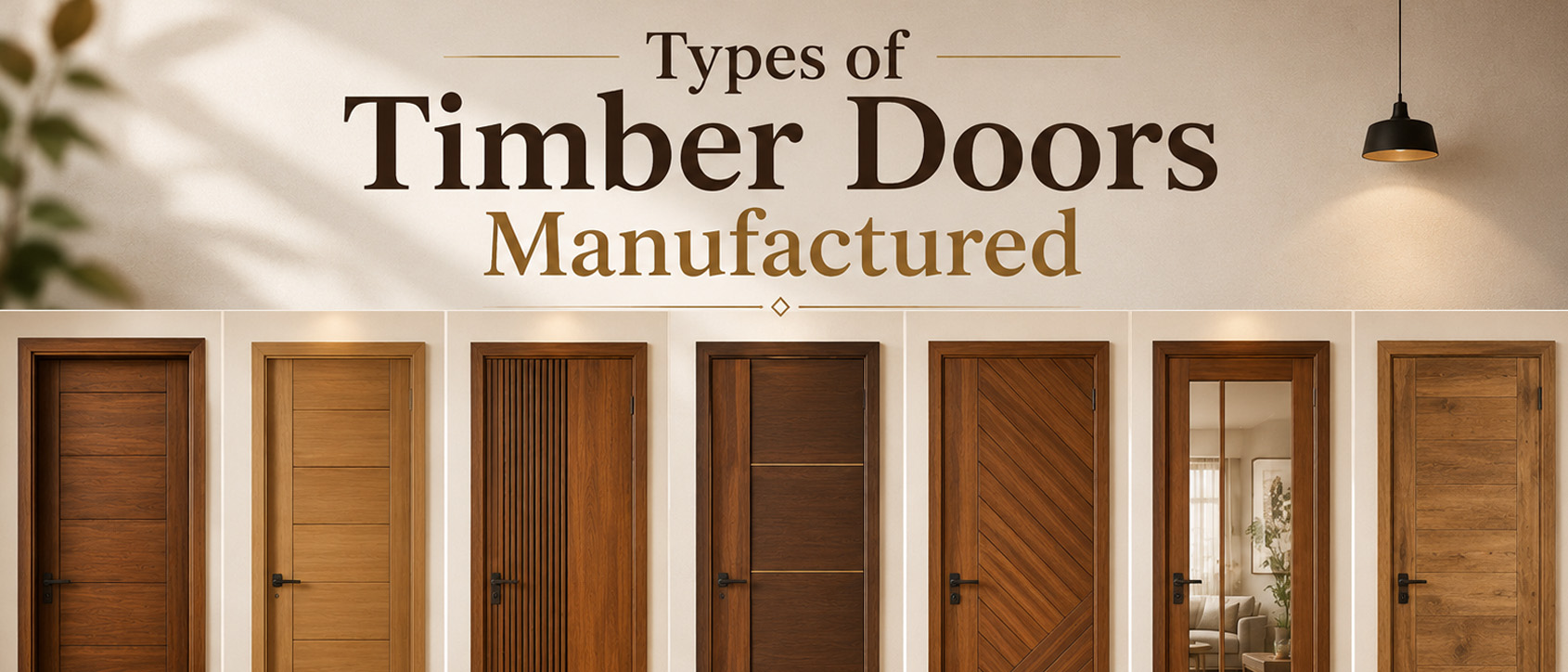
Types of Timber Doors We Manufacture
Different buildings require different types of doors. Our manufacturing capabilities cover a broad range of timber door solutions.
Solid Timber Doors
Solid timber doors are manufactured using natural timber and are valued for their strength, character and premium appearance.
The natural grain, texture and variation of timber give every door a distinctive visual identity. Solid timber doors are particularly suitable for applications where appearance and a substantial feel are important.
They are commonly used for:
- Main entrance doors
- Luxury residences
- Villas
- Premium developments
- Heritage-inspired properties
- Feature architectural entrances
Engineered Timber Doors
Engineered timber doors are designed to provide greater dimensional stability compared with certain solid timber constructions.
Depending on the construction, engineered doors can incorporate timber frames, engineered cores and timber veneers or other finishing materials.
They are suitable for:
- Bedrooms
- Offices
- Apartments
- Hotels
- Commercial buildings
- Modern residential developments
Their construction can help minimise movement associated with changes in environmental conditions while providing extensive design flexibility.
Custom Timber Doors
Custom timber doors are manufactured according to specific architectural or interior design requirements rather than being limited to standard catalogue dimensions.
Customisation can include door size, thickness, panel design, timber species, grooves, decorative elements, glazing and surface finishing.
This is particularly valuable for architects, designers and developers looking to create a consistent design language throughout a property.
Fire-Rated Timber Doors
Fire-rated timber doors are manufactured for applications where fire-resistance performance is required.
They may be used in:
- Hotels
- Hospitals
- Offices
- Schools
- Apartment buildings
- Shopping centres
- Commercial developments
For fire-rated applications, the required door construction and performance specifications should be selected according to the project's applicable requirements.
Acoustic Timber Doors
Acoustic timber doors are designed to help reduce sound transmission between spaces.
They can be particularly useful in:
- Meeting rooms
- Conference rooms
- Hotels
- Recording facilities
- Hospitals
- Educational institutions
- Private offices
The appropriate acoustic door construction depends on the required sound reduction performance and project specifications.
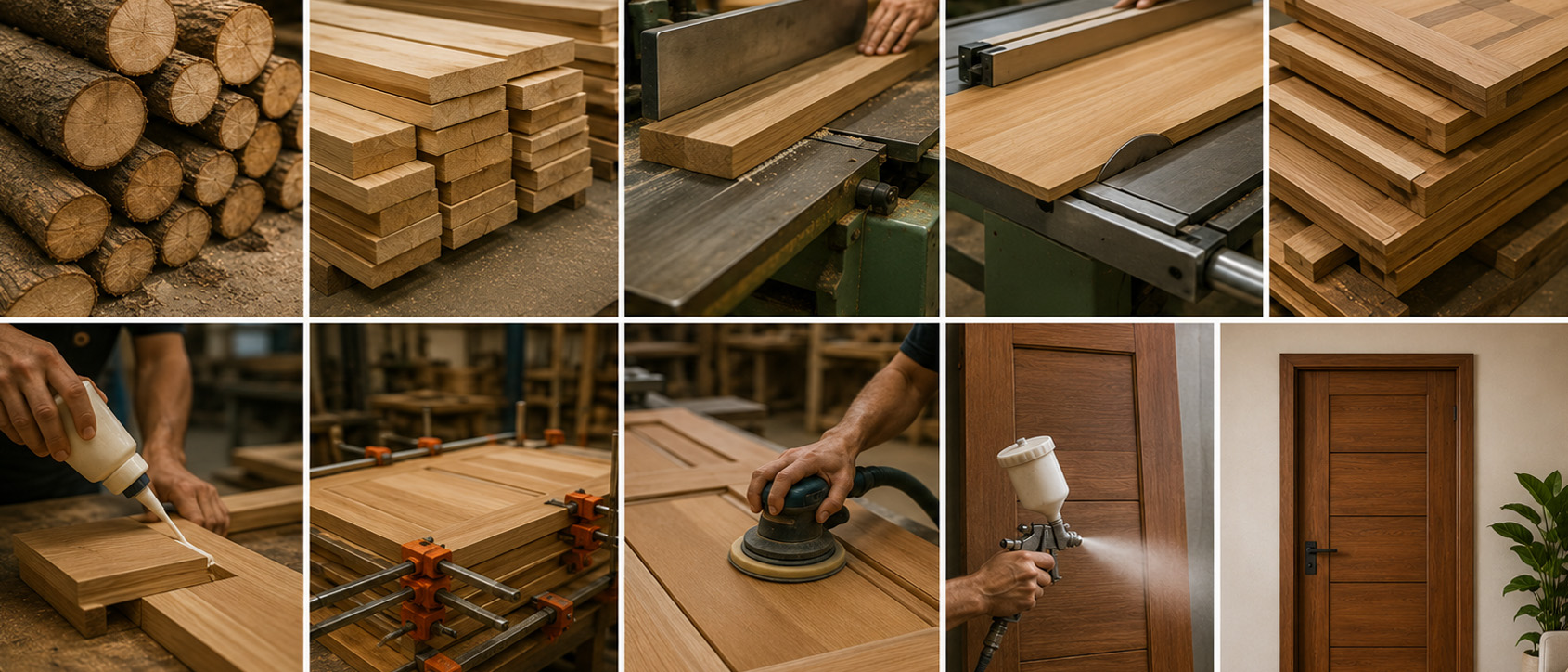
Our Timber Door Manufacturing Process
A professional manufacturing process is essential for producing timber doors with consistent quality.
At TimberTop, our production workflow includes several controlled stages.
1. Consultation and Specification
We begin by understanding the project's requirements. This includes the door application, dimensions, design, material preferences, finish, hardware requirements and performance specifications.
2. Material Selection
Timber and engineered wood materials are selected based on their intended application, appearance, stability and structural requirements.
3. Moisture Conditioning
Moisture control is an important part of timber door manufacturing. Proper conditioning helps minimise excessive movement, shrinking, expansion and warping.
4. Precision Cutting and CNC Machining
Modern machinery allows door components to be cut, shaped and profiled accurately according to the approved specifications.
CNC machining is particularly useful for repeatable designs, grooves, decorative profiles and customised architectural details.
5. Assembly
Door components are assembled using appropriate woodworking techniques, adhesives and precision joinery to create a structurally sound door.
6. Sanding and Surface Preparation
Multiple sanding stages are carried out to create a smooth and consistent surface ready for finishing.
7. Finishing
Depending on the project, timber doors can be finished with:
- Natural clear coatings
- PU coatings
- Wood stains
- Veneers
- Laminates
- Painted finishes
8. Final Inspection
Before delivery, every completed door undergoes quality checks covering dimensions, workmanship, surface finish, structural condition and hardware preparation.
Timber Door Applications
Timber doors are highly versatile and can be manufactured for a wide variety of environments.
Residential Properties
Our timber doors are suitable for:
- Bungalows
- Semi-detached houses
- Terraced houses
- Condominiums
- Apartments
- Luxury residences
- Villas
Applications include main entrance doors, bedroom doors, bathroom doors and internal doors.
Commercial Buildings
Businesses can use timber doors in:
- Offices
- Retail outlets
- Restaurants
- Banks
- Corporate buildings
- Shopping centres
Timber provides a professional appearance while allowing doors to be customised to suit corporate interiors.
Hotels and Resorts
Hospitality properties often require doors that combine aesthetics, durability and functionality.
Timber doors can be used for:
- Guest rooms
- Executive suites
- Hotel entrances
- Conference rooms
- Ballrooms
- Service areas
Healthcare Facilities
Hospitals and medical facilities can require specialised door solutions depending on the location and application. Timber-based door systems can be manufactured according to relevant project specifications.
Educational Institutions
Schools, colleges and universities require durable doors capable of handling frequent daily use.
Suitable applications can include classrooms, offices, meeting rooms, libraries and other internal areas.
Property Developments
Developers often require large quantities of doors with consistent specifications, finishes and quality.
Working with an established timber door manufacturer in Malaysia allows developers to streamline production and maintain consistency across multiple units.
Benefits of Choosing Timber Doors
Natural and Premium Appearance
Timber provides a warmth and visual character that is difficult to reproduce with synthetic materials. Natural grain patterns and textures can complement both classic and contemporary architecture.
Design Flexibility
Timber can be shaped, profiled, stained, painted, veneered and customised into numerous designs.
Good Durability
When appropriate materials, construction methods, finishes and maintenance practices are used, quality timber doors can provide long-term service.
Insulation Properties
Timber has naturally low thermal conductivity and can also contribute to acoustic performance depending on the door construction.
Architectural Versatility
Timber doors can be manufactured for minimalist, traditional, luxury, industrial-inspired and contemporary interiors.
Timber Doors vs Other Door Materials
Choosing a door material depends on your project's priorities.
| Feature | Timber Doors | Steel Doors | Aluminium Doors |
|---|---|---|---|
| Appearance | Natural and premium | Industrial | Contemporary |
| Customisation | Excellent | Moderate | Moderate |
| Design flexibility | Excellent | Moderate | Good |
| Thermal properties | Good | Lower without additional insulation | Varies by system |
| Acoustic potential | Good | Good | Varies by construction |
| Maintenance | Moderate | Generally low | Generally low |
| Typical applications | Residential, hotels, offices | Industrial and security | Commercial and modern buildings |
Timber remains a popular choice where natural aesthetics, customisation and architectural character are important.
How to Choose the Best Timber Doors Manufacturers in Malaysia
Not every company offering timber doors operates as a full manufacturer. Before choosing a supplier, consider the following factors.
1. Manufacturing Experience
Look for a company with demonstrated experience manufacturing timber doors for projects similar to yours.
2. Material Selection
Ask what timber species and engineered materials are available and how they are selected for different applications.
3. Customisation Capability
If your project has specific architectural requirements, confirm whether the manufacturer can produce custom dimensions, profiles, designs and finishes.
4. Manufacturing Technology
Modern CNC and precision manufacturing equipment can improve dimensional consistency and repeatability, particularly for large projects.
5. Quality Control
Ask about material inspection, moisture control, machining accuracy, finishing procedures and final inspection.
6. Project Capacity
For developers and contractors, manufacturing capacity is important. The manufacturer should be able to manage the required quantity without compromising consistency.
7. Technical Support
An experienced manufacturer should be able to advise on door construction, materials, finishes, hardware preparation and application suitability.
8. After-Sales Support
Reliable communication, installation guidance, warranty support and maintenance advice can provide additional value throughout the project.
Timber Door Manufacturer vs Timber Door Supplier
The terms manufacturer and supplier are often used interchangeably, but they can represent different business models.
| Timber Door Manufacturer | Timber Door Supplier |
|---|---|
| Manufactures doors in-house | May purchase products from manufacturers |
| Greater control over production | Less control over production |
| Greater customisation capability | Often focused on available products |
| Direct technical knowledge | Product knowledge varies |
| Can support production orders | Stock availability may vary |
| Factory-direct purchasing may be possible | Distribution margins may apply |
For large developments or highly customised projects, dealing directly with a timber doors manufacturer can provide greater flexibility and production control.
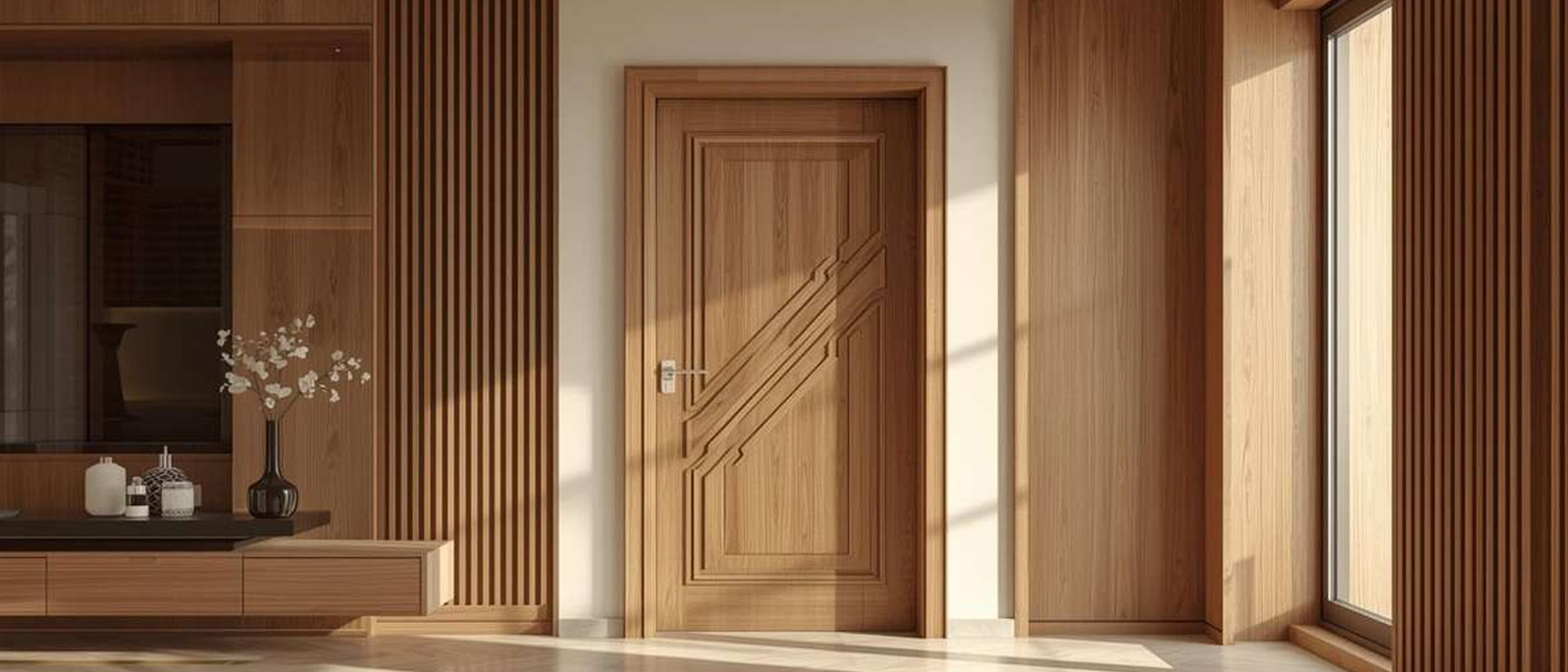
Timber Door Design Trends in Malaysia
Modern timber doors combine traditional woodworking with contemporary architectural design.
Popular designs include:
- Minimalist flush doors
- Natural timber grain finishes
- Vertical grooves
- Slimline panel designs
- Oversized entrance doors
- Timber and glass combinations
- Concealed hinges
- Modern black hardware
- Contemporary geometric patterns
- CNC decorative designs
These options allow timber doors to become an integral part of an interior or architectural concept rather than simply serving as functional elements.
Sustainable Timber Door Manufacturing
Sustainability is becoming increasingly important in construction and interior design.
Responsible timber door manufacturing can incorporate practices such as:
- Responsible timber sourcing
- Efficient material utilisation
- Reduction of production waste
- Recycling of suitable timber offcuts
- Efficient manufacturing processes
- Environmentally conscious finishing systems
- Low-VOC finishing options where appropriate
When sustainability is an important consideration for your project, discuss material sourcing and finishing requirements with your manufacturer before production.
Why Architects, Developers and Contractors Choose TimberTop
TimberTop provides a combination of manufacturing expertise, customisation capability and project support for customers throughout Malaysia.
Our customers choose us for:
- Experienced timber door manufacturing
- Premium material selection
- Precision manufacturing
- Custom-made door solutions
- Wide range of timber door designs
- Consistent quality control
- Competitive factory-direct pricing
- Large project production capability
- Reliable project delivery
- Technical support
- Professional after-sales service
Whether you require one bespoke timber entrance door or a complete door package for a large development, we work to deliver consistent quality from manufacturing through to project completion.
Timber Doors Manufacturers for Residential and Commercial Projects
Choosing the right timber doors manufacturers is an important decision because doors contribute to a property's appearance, functionality, comfort and long-term value.
A reputable manufacturer should be able to provide more than a finished product. You should expect reliable material selection, accurate manufacturing, customisation options, quality control and technical support throughout your project.
At TimberTop, we combine traditional woodworking knowledge with modern manufacturing technology to produce timber doors for residential, commercial, hospitality, institutional and development projects throughout Malaysia.
From solid timber entrance doors and engineered timber doors to custom architectural doors, veneer doors, flush doors, fire-rated doors and acoustic solutions, our manufacturing capabilities are designed to accommodate diverse project requirements.
Looking for reliable timber doors manufacturers in Malaysia? Contact TimberTop to discuss your door requirements, explore customisation options and request a quotation for your project.
Frequently Asked Questions About Timber Doors Manufacturers
1. What do timber doors manufacturers do?
Timber doors manufacturers design, manufacture, finish and supply doors made from natural timber or engineered wood materials. They can produce standard and customised doors for residential, commercial, hospitality and institutional applications.
2. Why should I choose a timber door manufacturer instead of a supplier?
Working directly with a timber door manufacturer can provide greater control over materials, manufacturing quality, dimensions, designs and finishes. Manufacturers can also provide more direct technical support and customised production solutions.
3. Can timber doors be made to custom sizes?
Yes. Custom timber doors can be manufactured according to specific dimensions, thicknesses, panel configurations, decorative details, glazing requirements and hardware preparations, subject to the manufacturer's capabilities.
4. What timber species are suitable for timber doors?
Common options include Merbau, Nyatoh, Oak, Teak, Ash, Walnut, Maple and Mahogany. The most suitable species depends on the intended application, design, durability requirements, availability and budget.
5. Are timber doors suitable for Malaysian homes?
Yes. Timber doors can be used in Malaysian residential properties when the appropriate timber, construction, moisture control, protective finish and installation method are selected for the intended environment.
6. Are timber doors suitable for commercial buildings?
Yes. Timber doors are widely suitable for offices, hotels, retail premises, restaurants, educational institutions and other commercial environments. Specialised fire-rated or acoustic constructions may be selected where required.
7. What is the difference between solid timber and engineered timber doors?
Solid timber doors use natural timber as the primary construction material, while engineered timber doors use engineered components or cores, often combined with timber frames or veneers. Engineered construction can provide improved dimensional stability for certain applications.
8. Can TimberTop manufacture fire-rated timber doors?
TimberTop offers fire-rated door solutions designed according to applicable project requirements. Specific fire-resistance performance and certification requirements should be confirmed according to the intended application.
9. Can timber doors include glass panels?
Yes. Depending on the design and application, timber doors can be manufactured with glass inserts or timber-and-glass combinations. The glazing specification should be selected according to the project's functional and safety requirements.
10. What finishes are available for timber doors?
Available finishes can include natural clear coatings, PU coatings, wood stains, veneers, laminates and painted finishes. The best option depends on the desired appearance, application and maintenance requirements.
11. Do timber doors require regular maintenance?
Like other natural wood products, timber doors benefit from appropriate maintenance. Regular cleaning, protection from excessive moisture, hardware inspection and periodic refinishing where necessary can help preserve their appearance and performance.
12. Can timber door manufacturers handle large property developments?
Yes. Established manufacturers with appropriate production capacity can manufacture doors for residential developments, hotels, offices, hospitals, educational facilities and other large-scale projects.
13. Do timber doors provide good acoustic performance?
Timber doors can contribute to sound reduction, although acoustic performance depends on the complete door construction, including the core, thickness, seals, frame and installation. For projects with specific acoustic requirements, the door should be specified according to the required performance level.
14. How do I choose the right timber door manufacturer in Malaysia?
Consider manufacturing experience, material quality, customisation capabilities, production technology, quality control, project capacity, technical support and after-sales service. A manufacturer with experience in projects similar to yours can provide more suitable recommendations.
15. Why choose TimberTop as a timber doors manufacturer in Malaysia?
TimberTop combines experienced craftsmanship, modern manufacturing technology, custom manufacturing capabilities and strict quality control. We manufacture timber door solutions for residential, commercial and large-scale development projects and provide support from initial consultation through to project completion.